

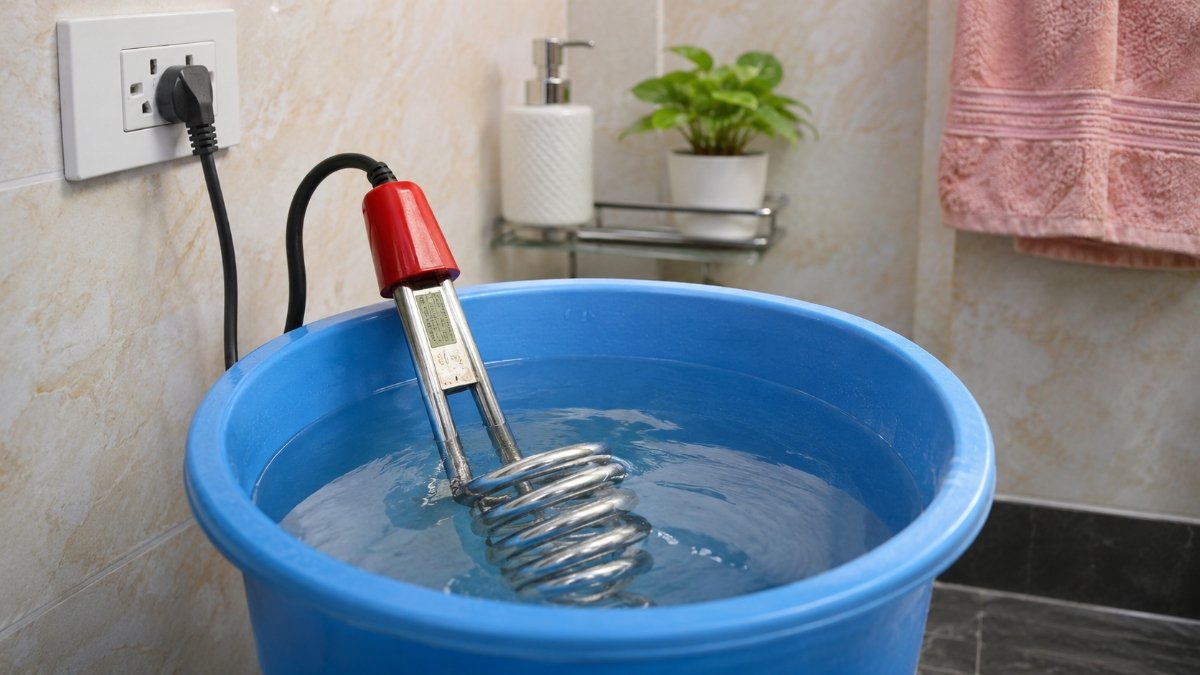
New Desk: As temperatures drop during winter, many households rely on electric immersion water heaters to heat water for bathing and other daily needs. Although these devices are affordable and convenient, careless handling can increase the risk of electric shocks and other accidents.
Immersion water heaters, commonly known as water-heating rods, are widely used because they are relatively inexpensive and easy to operate. However, since they involve both electricity and water, following basic safety precautions is essential.
A small mistake while using an immersion heater can lead to serious consequences. Here are some important safety measures to follow while using one at home.
10 Safety Tips to Follow While Using an Immersion Water Heater
1. Ensure the heating element is fully immersed before switching it on
Always ensure that the heating element is immersed in water to the level specified by the manufacturer before connecting the heater to the power supply. Never operate the rod outside water.
2. Never touch the water while the heater is switched on
Do not put your hand or fingers into the bucket to check whether the water is hot while the immersion heater is connected to electricity. First, disconnect the power supply completely before checking the water temperature.
3. Disconnect the power before removing the heater
Simply switching off the heater may not be sufficient. Disconnect the plug from the power socket before touching or removing the immersion rod from the water. Follow the manufacturer’s instructions for safe removal.
4. Avoid handling the heater with wet hands
Never touch the immersion heater, plug or electrical connections with wet hands. Avoid operating electrical appliances while standing on a wet surface.
5. Keep the heater away from children
Do not use immersion heaters in areas where young children play. Keep the device and its electrical cord out of their reach. Never leave a switched-on heater unattended.
6. Avoid using immersion heaters inside bathrooms
Bathrooms are wet and humid environments where the risk of electric shock can be higher. Avoid operating immersion rods inside bathrooms, particularly near water sources and wet surfaces.
7. Check the electrical connections before use
Inspect the plug, socket and power cord before switching on the heater. Do not use the appliance if the wire covering is torn, the socket is loose or any electrical connection appears damaged.
8. Avoid using metal buckets
Metal conducts electricity and can increase the risk of electric shock if an electrical fault occurs. Use a suitable plastic bucket or another container specifically permitted by the heater manufacturer.
9. Do not purchase low-quality immersion heaters
Avoid choosing an immersion heater solely because it is inexpensive. Buy products from reliable manufacturers and check that they meet applicable electrical safety standards.
10. Get the heater checked regularly
Inspect the heater, plug and electrical cord for signs of damage. If you notice any unusual smell, sparking, overheating or other problems, stop using the appliance and have it checked by an experienced electrician.
Why You Should Be Careful While Using Old Immersion Heaters
Immersion heaters that have been used for a long time may develop problems with their electrical cords, plugs or heating elements. Such appliances should be inspected before further use.
Many basic immersion heaters also do not have an automatic shut-off facility. Therefore, users must switch them off and disconnect the power supply after use.
During winter, hot water becomes a daily necessity for many households. However, convenience should never come at the cost of safety. Proper handling, regular inspection and following the manufacturer’s instructions can help reduce the risk of accidents while using an immersion water heater.
Safety Note: This report is intended for general awareness. Always follow the manufacturer’s safety instructions and consult an experienced electrician if you notice any electrical fault.