
Northeast India’s Growth Story: Connectivity, Investment and Tourism Shape the Region’s Future
With more than 1,900 km of new railway lines built since 2014, expanding road infrastructure and investment interest worth ₹4.48 lakh crore, Northeast India is emerging as an important focus of India’s development strategy. The real test will be how these initiatives translate into jobs, trade and better opportunities for local communities.
Northeast India growth is entering an important phase, driven by improved transport connectivity, industrial investment, tourism development and stronger links with Southeast Asia. These changes could create new opportunities for businesses, young people and local communities across the region.
Comprising Assam, Arunachal Pradesh, Manipur, Meghalaya, Mizoram, Nagaland, Sikkim and Tripura, the region has considerable potential in agriculture, food processing, tourism, handloom, handicrafts, energy and services.
However, development cannot be measured by infrastructure projects and investment announcements alone. Employment generation, project completion, business growth and improvements in people’s lives will determine whether the region’s economic potential is fully realised.
Northeast India Growth: Roads and Railways Expand Opportunities
Transport infrastructure is central to the Northeast’s economic development.
According to the Ministry of Road Transport and Highways, the length of National Highways in the region increased from 10,905 km in 2014 to 16,207 km as of March 31, 2025.
A government update published on January 30, 2026, also reported that 177 National Highway projects covering 3,635 km, with a combined cost of ₹87,119 crore, were at different stages of implementation.
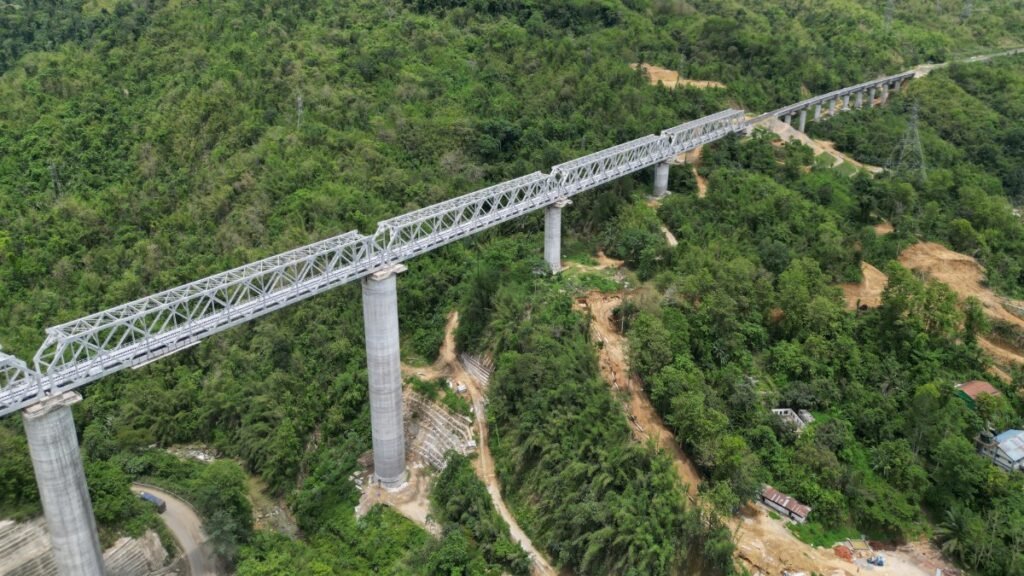
Railway infrastructure has also expanded significantly. According to the Ministry of Railways, approximately 1,900 km of new railway lines have been constructed across the Northeast since 2014.
The railway budget allocation for infrastructure projects and safety works falling fully or partly within the region increased from an annual average of ₹2,122 crore during 2009–14 to ₹11,486 crore in the 2026–27 financial year.
More than ₹72,000 crore worth of railway projects were reported to be under implementation across different stages, including new lines, station redevelopment and safety-related works.
Better transport connections can reduce travel time, improve access to markets and make it easier to move agricultural produce and industrial goods. They can also strengthen tourism and improve access to essential services.
However, the economic benefits depend on the quality of infrastructure, reliable transport services, affordable logistics and effective connections between production centres and markets.
Investment: Converting Announcements into Economic Activity
The Northeast has attracted growing attention from investors interested in tourism, food processing, textiles, healthcare, information technology, energy and infrastructure.
The Rising Northeast Investors Summit, held in May 2025, and its associated roadshows generated investment interest worth ₹4.48 lakh crore, according to the Ministry of Development of North Eastern Region.
The figure included memoranda of understanding, letters of intent and qualified leads from private investors, public sector undertakings and major industrial groups.
It is important to distinguish investment interest from actual investment. The ₹4.48 lakh crore figure does not mean that the entire amount has already been invested or that all the proposed projects are operational.
The next stage is to track how many proposals progress to financial closure, construction and commercial operations.
For the region, the quality of investment will be as important as its size. Projects that employ local people, purchase from regional suppliers and create opportunities for small businesses can generate wider economic benefits.
Agriculture and food processing offer opportunities to improve farmers’ earnings through better storage, packaging, processing and market access. Traditional textiles and handicrafts could also reach new customers through digital commerce, improved branding and tourism.
Public Spending and Infrastructure Development
Government expenditure provides another indicator of the scale of development activity in the region.
According to a Ministry of Development of North Eastern Region update published on April 1, 2026, cumulative expenditure for the development of the Northeast under the 10% Gross Budgetary Support mechanism stood at ₹6.11 lakh crore during 2014–15 to 2024–25, against a revised allocation of ₹6.02 lakh crore.
This figure refers to the specified government funding mechanism and should not be interpreted as the total investment made by every public and private agency in the region.
The figures indicate the scale of public resources directed towards regional development. Their impact, however, must be assessed through completed projects, service delivery, employment outcomes and measurable improvements in living standards.
Tourism: An Opportunity for Local Businesses
Northeast India offers a diverse range of tourism experiences, from wildlife reserves and river islands to mountain landscapes, traditional villages, monasteries and cultural festivals.
Assam’s Kaziranga National Park and Majuli, Meghalaya’s natural landscapes, Mizoram’s hill destinations, Nagaland’s cultural festivals and Arunachal Pradesh’s mountain tourism are among the region’s attractions.
Tourism can support hotels, homestays, restaurants, local guides, transport operators, artisans and small producers. It can also create opportunities for communities outside major urban centres.
The Ministry of Development of North Eastern Region has identified model tourism circuits in the eight Northeastern states. Assam’s proposed circuit links Jorhat, Kaziranga and Tezpur, while Meghalaya’s identified circuit includes Shillong, Sohra and Nongriat.
Connected tourism circuits could encourage visitors to explore several destinations during one trip, potentially increasing spending across different local economies.
But tourism growth needs to be supported by reliable transport, accommodation, sanitation, waste management and environmental safeguards. Visitor numbers alone do not reveal how much local communities earn from tourism.
Data on average visitor spending, length of stay, local employment and seasonal income would provide a clearer picture of the sector’s economic impact.
Act East Policy: Connecting the Northeast with Southeast Asia
The Northeast’s geographical position gives it strategic importance in India’s engagement with Southeast Asia.
India’s Act East Policy focuses on connectivity, economic cooperation, cultural links and stronger regional relationships. The India–Myanmar–Thailand Trilateral Highway and the Kaladan Multi-Modal Transit Transport Project are among the major initiatives intended to improve cross-border connections.
Progress has been uneven, and some components remain incomplete.
In an update published on August 6, 2026, the Ministry of Development of North Eastern Region stated that the waterway component of the Kaladan project had been completed and inaugurated in May 2023. The road component comprises a 109-km two-lane highway between Paletwa in Myanmar and Zorinpui in Mizoram.
The ministry also reported that the Kalewa–Yargi section of the India–Myanmar–Thailand Trilateral Highway, covering the stretch from kilometre 112 to kilometre 60, was completed and handed over to the Myanmar government in October 2025.
These developments represent progress on individual components, not completion of the entire regional transport corridor.
If the wider connections become operational and trade procedures improve, businesses in the Northeast could gain access to larger markets. However, the benefits will depend on the completion of outstanding infrastructure, border management, regional security and the competitiveness of local products.
Challenges That Will Determine the Outcome
Despite improvements in infrastructure and investment planning, several issues require attention.
Employment generation: New projects need to create sustainable jobs and provide training relevant to industry requirements.
Support for local enterprises: Small businesses need access to finance, technology, reliable transport and wider markets.
Balanced regional development: Remote and border areas need better access to essential services and economic opportunities.
Environmental protection: Infrastructure and tourism development must account for forests, wildlife, fragile ecosystems and the interests of local communities.
Project accountability: Investment proposals and public spending must be assessed against actual expenditure, completion schedules, operational status and jobs created.
Transparent data on these indicators would help residents, businesses and policymakers evaluate the real impact of development initiatives.
The Road Ahead
Northeast India has several advantages, including cultural diversity, agricultural resources, tourism assets and a strategic geographical position. Expanding connectivity and investment interest could strengthen these advantages.
Yet the region’s future cannot be judged by the number of projects announced or the amount of investment proposed alone.
The more important questions are whether farmers receive better prices, whether local businesses gain new markets, whether young people find suitable employment and whether economic growth improves the lives of communities across all eight states.
The next phase of development will require effective project implementation, stronger local enterprises, environmental responsibility and transparent monitoring of public spending.
The real measure of the Northeast’s growth will be its ability to turn connectivity into commerce, investment into employment and tourism into sustainable livelihoods.