
Kamakhya Temple Navratri: 15-Day Durga Puja, 20,000 Daily Devotees and 45 Kumari Worship Tradition
By Manoj Kumar Laskar | Guwahati, Assam
From the 15-day Sharadiya Durga Puja to the worship of 45 young girls, Kamakhya Temple in Assam follows distinctive Navratri traditions rooted in centuries-old religious practices.
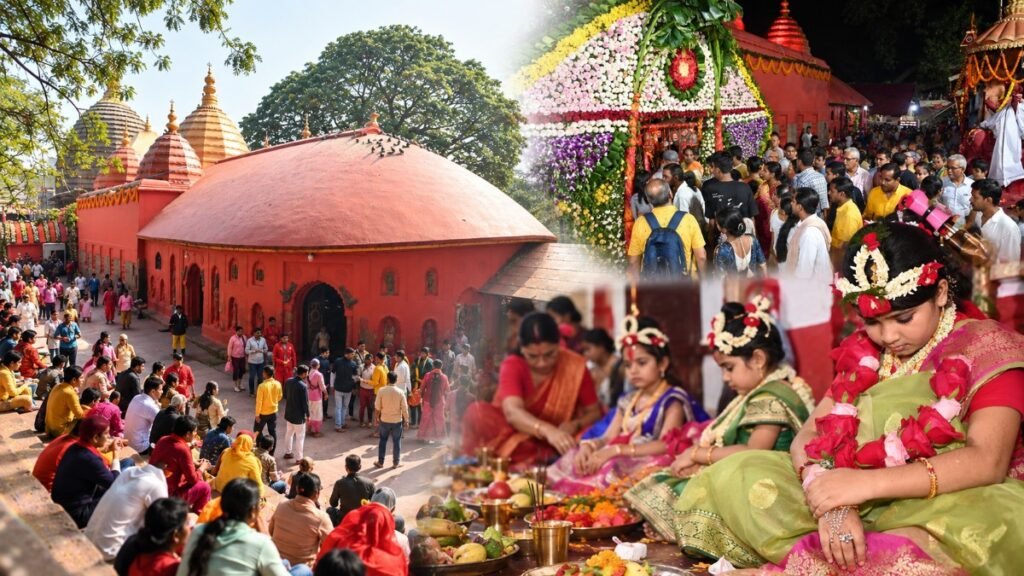
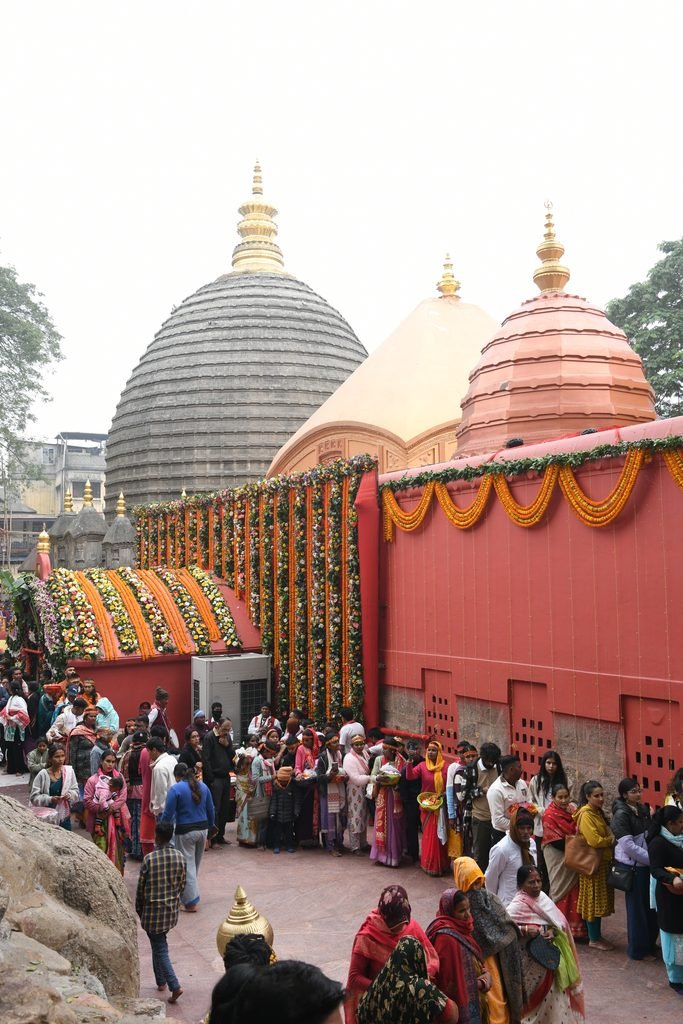
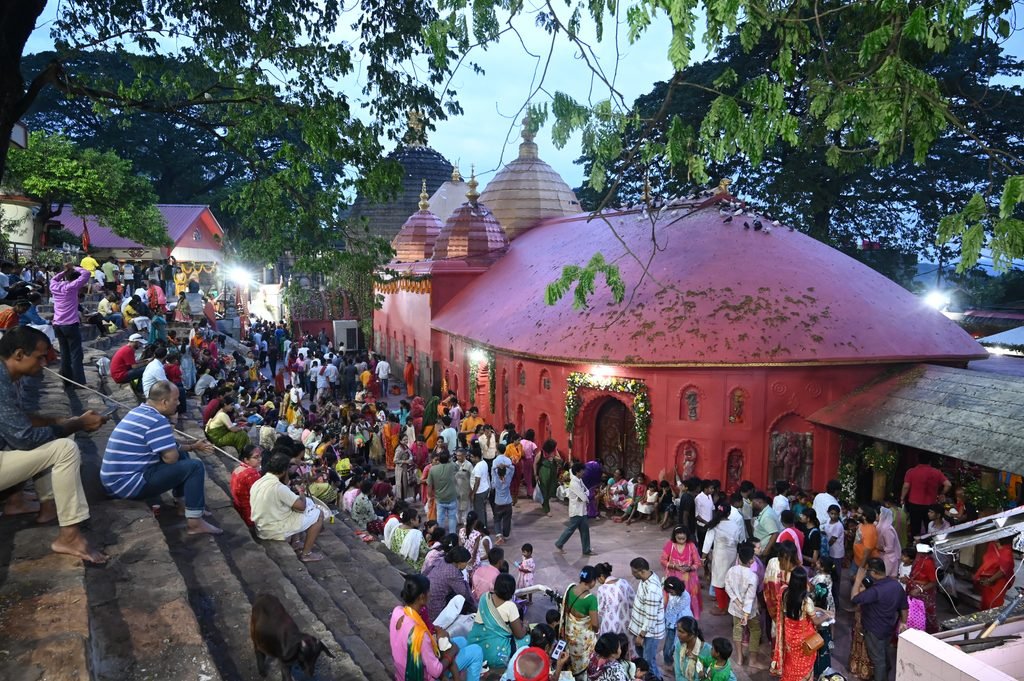
Atop Nilachal Hill in Guwahati, a long queue of devotees stretches towards the historic Kamakhya Temple. Some hold flowers and offerings in their hands, while others wait patiently for their turn to seek the blessings of Goddess Kamakhya. For many, the wait lasts several hours.
The steady stream of pilgrims reflects the religious significance of Kamakhya Temple during Navratri. However, the festival here follows a tradition that differs from the nine-day celebrations commonly observed across much of India.
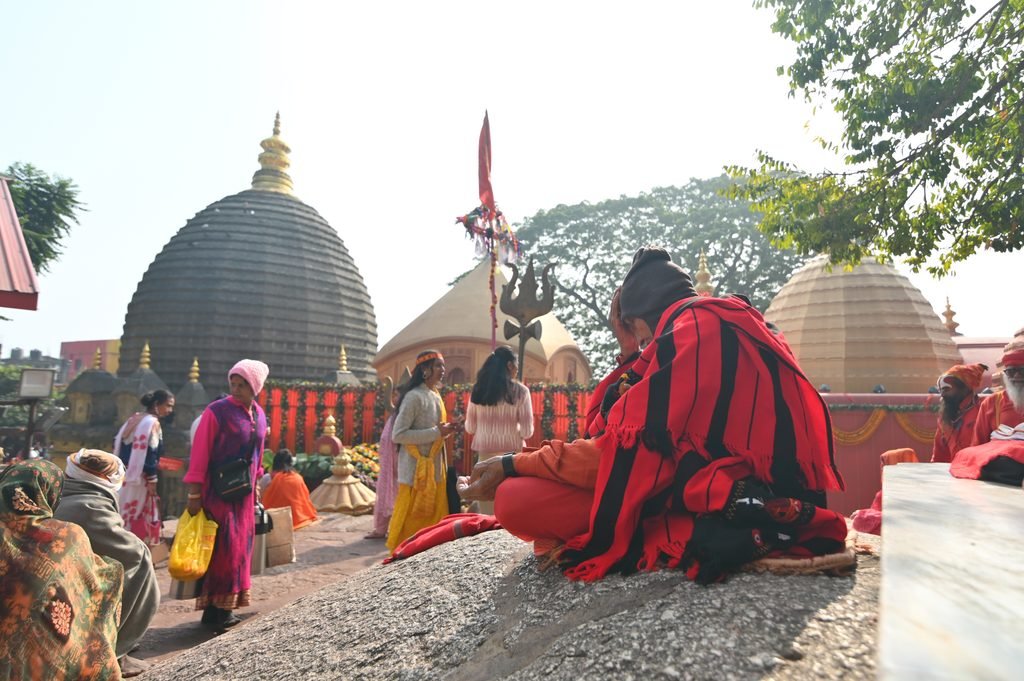
Kamakhya Temple Navratri is marked by a 15-day Sharadiya Durga Puja, according to the temple’s chief priest and head of its traditional management, Bor Doloi Kabindra Prasad Sarma.
In 2026, the special puja began on Sunday, October 4, on Krishna Navami, the ninth day of the waning lunar fortnight, and is scheduled to continue until Shukla Navami, the ninth day of the waxing fortnight.
From daily worship and special rituals to offerings, evening prayers and Kumari Puja, the observances offer a glimpse into the distinctive religious traditions of this major Shakti Peetha in Assam.
Why Does Kamakhya Temple Celebrate a 15-Day Durga Puja?
While Navratri is commonly associated with nine nights of worship, Kamakhya follows a longer schedule for its Sharadiya Durga Puja.
Bor Doloi Kabindra Prasad Sarma says the traditional observance begins on Krishna Navami and continues until Shukla Navami. The 15-day schedule is an established part of the temple’s religious practices.
According to the religious tradition explained by Sarma, the observance is associated with the belief that Lord Rama worshipped Goddess Chandi before fighting Ravana. The special worship during the autumn season is linked to this tradition of seeking the Goddess’s blessings before the battle against evil.
At Kamakhya, the regular daily worship continues alongside the special rituals performed during the festival.
Sarma says special observances are conducted on Saptami, Ashtami and Navami. These include the traditional practice of Mahisha Bali, or buffalo sacrifice, as part of the temple’s ritual system.
The extended schedule is one of the defining features of Kamakhya Temple Navratri and distinguishes its Sharadiya Durga Puja from the more widely known nine-day observance.
From Morning Worship to Evening Aarti
The daily routine at Kamakhya Temple takes on a special rhythm during the 15-day festival.
The day begins with the regular worship of Goddess Kamakhya, followed by rituals associated with Sharadiya Durga Puja. Offerings are made during the day, and arrangements are made for the distribution of bhog, the food offered to the deity.
The evening brings another important phase of worship. Special rituals are performed, followed by the daily aarti before the temple closes for the day.
According to the Bor Doloi, the festival’s worship schedule includes morning, midday and evening rituals, with the evening observances forming an important part of the daily religious routine.
For devotees waiting outside, the rituals inside the temple represent the central purpose of their visit. The queue moves forward gradually as pilgrims wait for their opportunity to enter and offer prayers.
Evening Aarti: Lamps, Chants and an Ancient Ritual Tradition
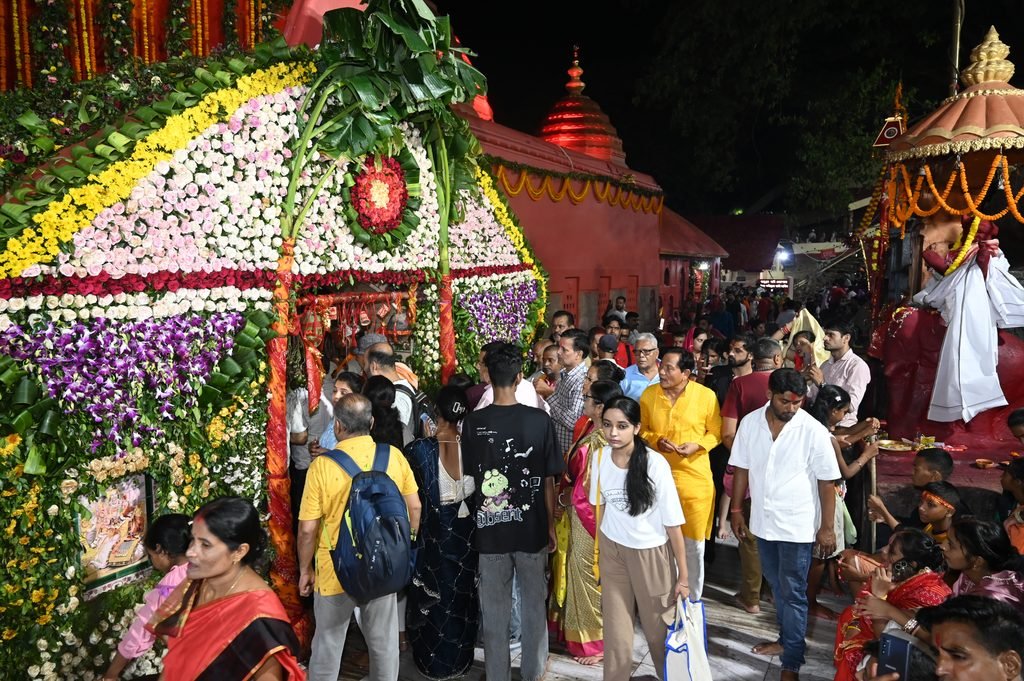
The evening aarti is an important part of the Kamakhya Temple Navratri experience.
Photography is restricted inside the sanctum, which means the rituals cannot be fully documented through photographs or videos. Devotees who enter the sacred space experience the ceremonies directly rather than through recorded images.
During the special worship period, lamps, incense, chants and ritual sounds contribute to the atmosphere inside the temple.
The temple’s traditions also include special observances associated with Mahashtami and Mahanavami. The Sandhi Puja, performed at the transition between Ashtami and Navami, is an important ritual in the Durga Puja calendar. The lighting of 108 lamps is associated with this special worship.
The chanting of prayers and the sound of bells accompany the rituals. The combination of light, incense and devotional sounds creates an atmosphere that many pilgrims describe as deeply spiritual.
Kamakhya is also closely associated with Tantric traditions. Its religious practices and the worship of the Goddess in the form of the sacred Yoni Peetha distinguish the temple from many other prominent Hindu shrines.
Inside the sanctum, the sacred natural rock formation associated with the Yoni Peetha is the principal object of worship. The temple’s rituals centre on this sacred site rather than on a conventional anthropomorphic idol of the Goddess.
For devotees, the evening rituals are not merely a visual spectacle. They are part of a long-established tradition of worship at one of India’s best-known Shakti Peethas.
Bhog Doubles During the 15-Day Festival
The festival also brings a substantial increase in the preparation of bhog, the food offered to the deity.
According to Bor Doloi Kabindra Prasad Sarma, the quantity of bhog prepared during the festival is approximately twice the amount prepared on normal days.
The offerings include rice, lentils, vegetables, fish and meat. Alongside the regular daily offerings to Goddess Kamakhya, special bhog is also offered during the Sharadiya Durga Puja.
Some offerings made during the evening rituals are subsequently distributed among devotees.
The food traditions at Kamakhya reflect the temple’s distinctive ritual practices, which differ from the customs followed at many other major Hindu temples.
The increased quantity of bhog during the festival is also an indication of the additional arrangements required to accommodate the larger number of pilgrims visiting the shrine.
Around 20,000 Devotees Visit Daily During Navratri
The long queues outside Kamakhya Temple offer a visible indication of the increased footfall during the festival.
Bor Doloi Kabindra Prasad Sarma estimates that approximately 10,000 devotees visit the temple on a normal day. However, because of the limited time available for darshan and the temple’s arrangements, only around 4,000 to 5,000 devotees are able to complete darshan on such days.
During Navratri, the daily footfall rises to approximately 20,000 devotees, according to Sarma.
The figures are estimates provided by the temple’s chief priest and should not be treated as independently audited visitor counts.
The profile of visitors has also changed over time. Earlier, devotees from Assam and neighbouring West Bengal formed a significant part of the pilgrim population. Sarma says the temple now receives visitors from several other parts of India as well.
He has observed an increase in devotees arriving from southern states, including Karnataka, Tamil Nadu, Andhra Pradesh, Telangana and Kerala, over the past one to two years. Pilgrims from northern India also arrive in considerable numbers during Navratri.
The growing geographical spread of visitors has increased the importance of crowd management and visitor facilities during the festival.
The temple provides ticketing arrangements and a waiting hall for devotees. Visitors are allowed to proceed for darshan in batches, while CCTV cameras and security arrangements help manage the crowd.
Kumari Puja: Why 45 Young Girls Are Worshipped
One of the distinctive traditions associated with Kamakhya Temple Navratri is Kumari Puja, the ritual worship of young girls as manifestations of the divine feminine.
Although Kumari Puja is observed in different parts of India, the schedule followed at Kamakhya has its own pattern.
According to Bor Doloi Kabindra Prasad Sarma, the number of girls worshipped increases each day from Pratipada to Navami.
On Pratipada, one girl is worshipped. On Dwitiya, the number rises to two, followed by three on Tritiya. The number continues to increase in the same sequence until nine girls are worshipped on Navami.
The cumulative total over these nine days is 45 Kumaris.
This tradition is one of the most distinctive elements of the temple’s extended festival observances. It also highlights the central place of feminine divinity in the religious practices associated with Kamakhya.
For devotees, the ritual represents reverence for the divine feminine and the belief that the Goddess can be worshipped through different manifestations of feminine power.
Ancient Rituals Continue Despite Changes in Temple Management
Over the years, the arrangements for visitors to Kamakhya Temple have changed in response to growing pilgrim numbers and changing requirements.
The system of darshan, crowd management and security has evolved. Modern facilities have become increasingly important as devotees arrive from different parts of the country.
However, Sarma says the temple’s internal system of worship and ritual service continues to follow established traditions.
According to him, although certain external arrangements and practices related to visitor management have changed over time, the core rituals and religious services remain rooted in the practices followed by earlier generations.
This continuity is an important aspect of Kamakhya’s religious identity. The temple must accommodate a growing number of pilgrims while preserving the ritual practices that have shaped its history.
Devotees from Delhi and West Bengal Describe Their Experience
The diversity of visitors is evident in the pilgrims arriving at Nilachal Hill during Navratri.
Prem Mishra, a devotee who travelled from New Delhi, described his experience at Kamakhya as different from that at other Shakti Peethas.
He said the temple’s association with Tantric traditions and its distinctive religious atmosphere made the visit a special experience for him.
Manna Dey, a devotee from West Bengal, also spoke about the spiritual atmosphere of the area.
According to Dey, Kamakhya is not limited to the main shrine alone. The presence of temples associated with the Dashamahavidyas—the ten forms of divine wisdom in the Shakta tradition—adds another dimension to the religious experience on Nilachal Hill.
The Dashamahavidya tradition includes deities such as Kali, Tara and Tripurasundari, among others.
For devotees visiting during Navratri, the wider temple complex offers an opportunity to encounter different aspects of Shakta worship within the same sacred landscape.
Their accounts reflect the varied reasons people travel to Kamakhya: devotion, interest in ancient religious practices and a desire to experience the temple’s distinctive spiritual traditions.
Kamakhya Temple Navratri: Beyond the Nine Days
At Kamakhya Temple, the festival extends beyond the nine days commonly associated with Navratri.
The 15-day Sharadiya Durga Puja, which began on October 4, 2026, brings together daily worship, special rituals, offerings, evening aarti and the distinctive tradition of Kumari Puja.
According to the Bor Doloi, the festival sees an estimated 20,000 devotees visiting the temple each day, compared with approximately 10,000 on normal days. The quantity of bhog also doubles, while the worship of 45 Kumaris from Pratipada to Navami remains a defining feature of the observance.
Outside the temple, pilgrims wait in long queues for darshan. Inside, priests and temple servants continue the rituals that have been passed down through generations.
The contrast between the growing number of visitors and the continuity of traditional worship captures the distinctive character of the festival.
For some, Kamakhya is a place of personal faith. For others, it is an opportunity to encounter the traditions of Shakta worship and the temple’s association with Tantric practices.
Together, these elements make Kamakhya Temple Navratri a distinctive expression of Assam’s religious heritage, where an extended festival, ancient rituals and a growing stream of pilgrims converge on Nilachal Hill.