
By Chandan Jyoti Borah,Nagaon: At a time when school magazines often require institutional resources and organised publication arrangements, a small school in Assam has demonstrated how creativity and student participation can sustain a publishing initiative with minimal expenditure.
For the past five years, students and teachers of Swargiya Dhaniram Saikia Jatiya Vidyalaya at Uttar Petboha in Nagaon district have been publishing a handwritten school magazine titled Ankuran. What makes the initiative particularly noteworthy is its cost: each annual edition is produced with an expenditure of just Rs 400 to Rs 500.
More than a school magazine, Ankuran has become a platform for students to develop their writing skills, express ideas, explore different subjects and gain practical experience in editorial work.
Established in 2009, the school has continued this initiative despite limited infrastructure and financial constraints. Its teachers have sought to go beyond classroom-based education by creating opportunities for students to participate in literary and intellectual activities.
The first edition of Ankuran was published on November 14, 2022, coinciding with Children’s Day. Since then, a new edition has been brought out every year on the same occasion.
One of the most distinctive features of the initiative is the involvement of students in the editorial process. A student is entrusted with the responsibility of editor every year, while other students contribute through handwriting, cover design, illustration and editorial assistance.
This gives students an opportunity to understand how a publication is prepared, from collecting articles and organising content to editing and presenting the final magazine.
The first edition featured contributions from 44 individuals, including students and teachers. It included articles, poems and other writings on subjects such as the Assamese language, the harmful effects of drugs, the Phulaguri Uprising and the influence of social media.
The second edition, published in 2023, included eight articles, 14 poems and 14 other special write-ups. Students wrote about personalities such as former President A.P.J. Abdul Kalam, scientist Albert Einstein and India’s first Prime Minister Jawaharlal Nehru. Other subjects included discipline, reading habits, the influence of modernity on young people and Chandrayaan-3.
The third edition, released in 2024, featured nine articles, 19 poems and nine other special contributions. Topics included the impact of global warming on Assam, classical language, the responsibilities of students and parents in formal education, and historical personalities such as Joymoti Konwari, Lachit Borphukan and Srimanta Madhavdeva.
The fourth edition, published on Children’s Day in 2025, carried eight articles, 17 poems and 14 other write-ups. Among the subjects covered were Majuli, Srimanta Sankardeva, rural society and modernisation. It also included tributes to singer Zubeen Garg.
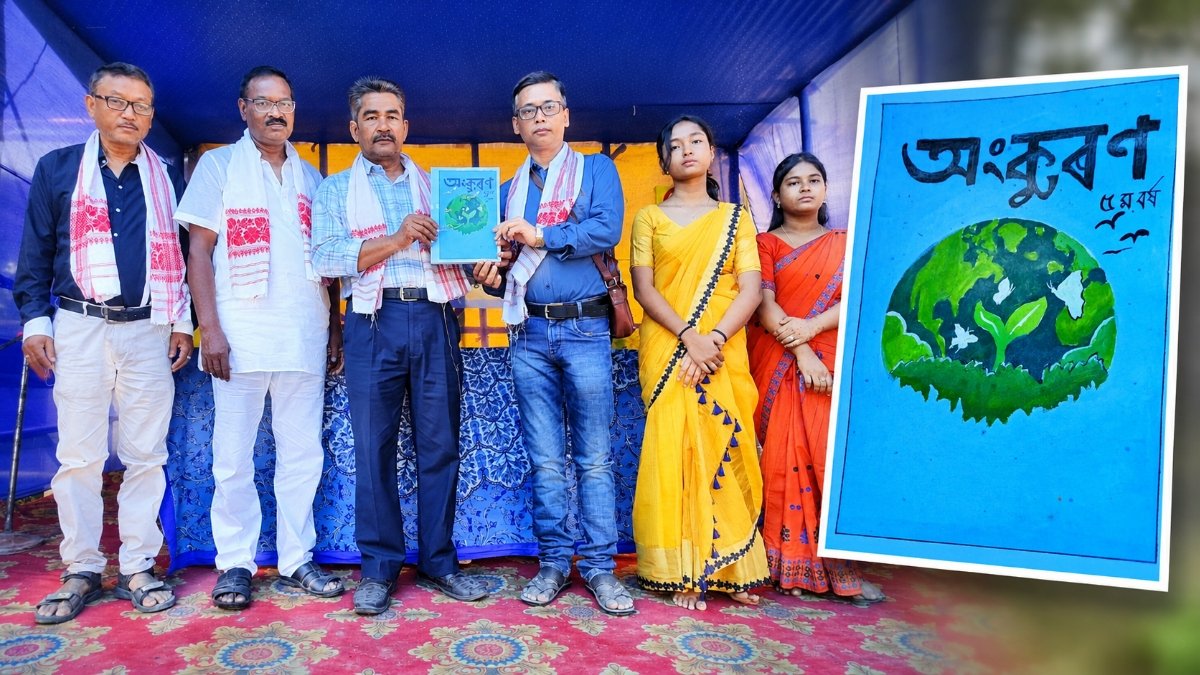
The fifth edition was unveiled on November 14, 2026, by journalist Chandan Jyoti Borah.
The latest edition explores subjects including Assamese cinema, women’s empowerment, rural society, artificial intelligence and human relationships, child marriage, and the importance of libraries and reading habits. It also features writings on Zubeen Garg and the Phulaguri Uprising.
Speaking about the idea behind the magazine, teacher and supervisor Bedanta Bora said the name Ankuran was chosen to reflect the process of a seed developing into a plant.
He explained that the magazine represents an effort to nurture the hidden talents of students, much like a seed gradually grows into a plant. The cover design of each edition therefore features the image of a germinating seed.
Bora said that publishing a handwritten magazine does not necessarily require substantial financial resources. According to him, each edition of Ankuran costs only Rs 400 to Rs 500 to prepare.
At the fifth edition’s unveiling, journalist Chandan Jyoti Borah highlighted the significance of the magazine’s five-year journey.
“Just as a small sprout eventually grows into a large tree, a magazine that has completed five years by nurturing the seeds of knowledge, thought, creativity and intellectual curiosity reflects a significant literary and cultural journey,” he said.
He expressed hope that the magazine would open new avenues of thought among students and contribute to the development of a progressive and informed society.
The initiative demonstrates how a modest school-level effort can create opportunities for experiential learning. By involving students directly in writing, editing, designing and publishing, the school has turned a simple handwritten magazine into a continuing exercise in creativity, responsibility and intellectual development.
Also Read: The Ageing Society: Is India Prepared for the Challenges of an Older Population?