

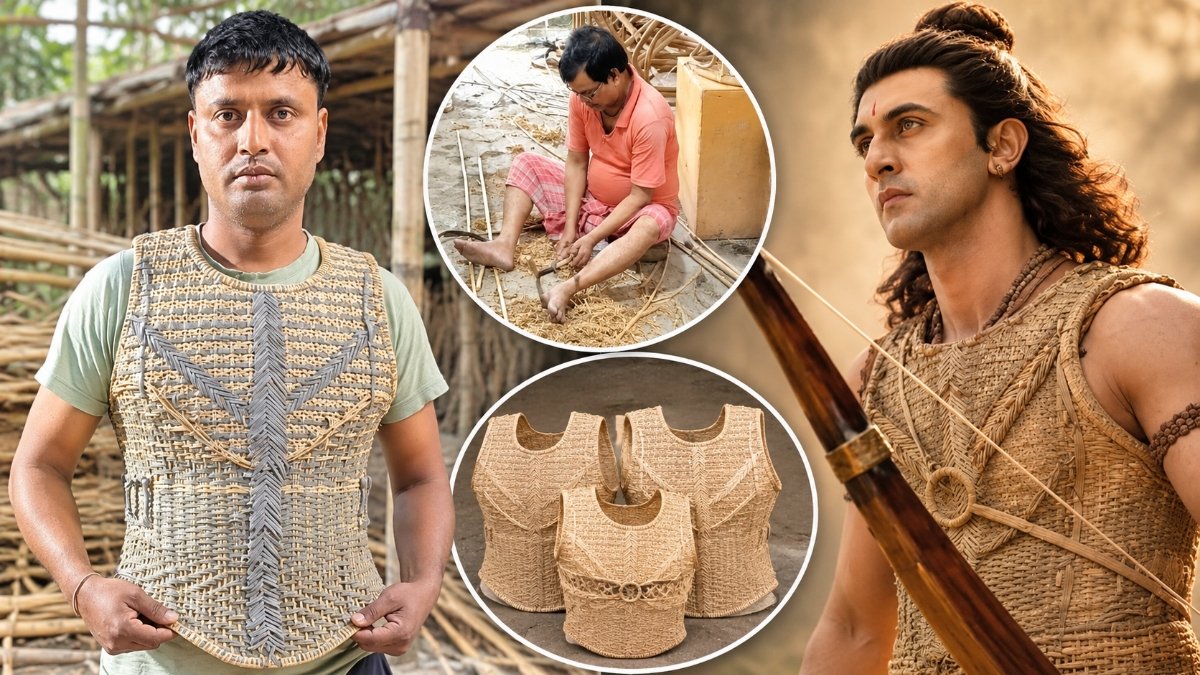
Barpeta, November 11: The rhythmic sound of splitting cane and the delicate weaving of natural fibres can be heard along the road from Barpeta town towards Banglipara junction near Jania. For generations, artisans in this remote village have earned their livelihood through traditional cane and bamboo craftsmanship.
Today, this age-old craft has found an extraordinary place in Indian cinema. Master craftsman Jaynal Abedin from Banglipara has taken Assam’s traditional cane artistry to the big screen by designing intricate armour for characters in the newly released Bollywood epic Ramayana, directed by Nitesh Tiwari.

The film, starring Ranbir Kapoor, Yash and Sai Pallavi, has emerged as one of the biggest cinematic releases of the year.
While making furniture and everyday household items from cane and bamboo is a routine occupation for hundreds of artisans in Banglipara, Abedin’s contribution to the ambitious film project has brought national attention to the village’s traditional craftsmanship.
“I was informed a few days ago that the film had hit the screens. I haven’t had the chance to see it yet, but I am incredibly excited and am definitely going to watch it very soon,” a beaming Abedin told this correspondent.
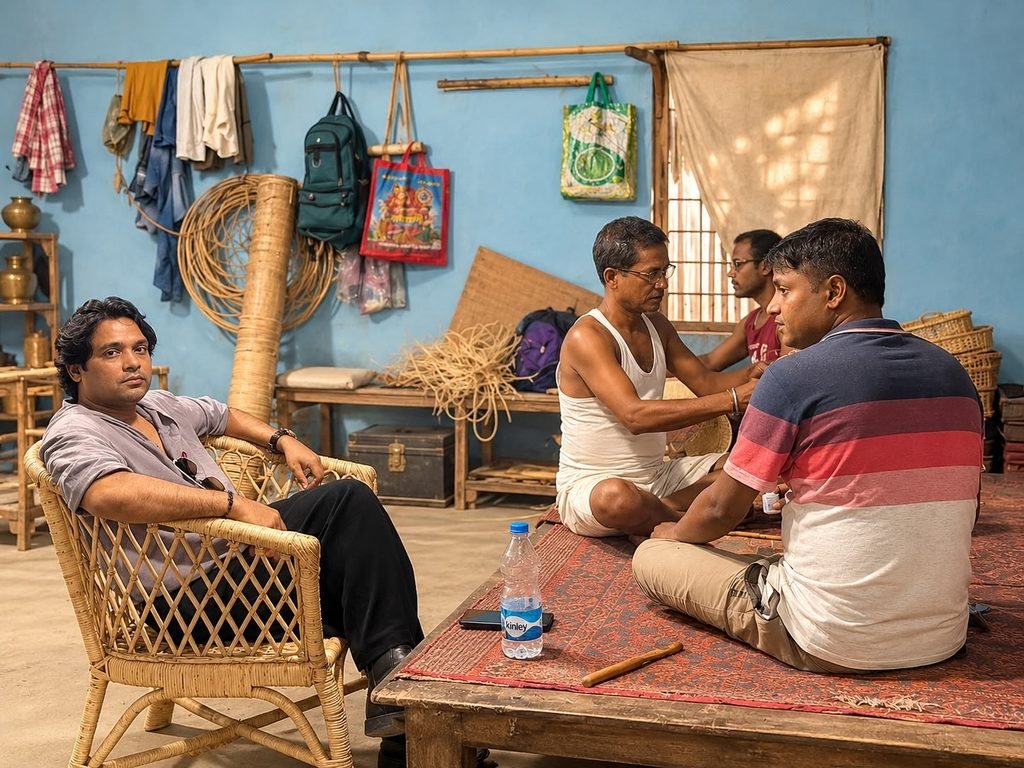
Seeing Assam’s indigenous cane artistry featured in such a major cinematic production is a once-in-a-lifetime experience for the master craftsman. He is now eagerly waiting to witness his creations on the big screen.
Titled Ramayana: Rise of a Legend, the mythological epic has made a strong impression at the global box office. The film reportedly grossed over ₹823.50 crore worldwide within its first six days of theatrical release on November 5.

How Barpeta’s Cane Craft Became Part of Ramayana
Abedin explained that the journey began when Bollywood’s costume design unit, led by head designer Ajay, approached him to create an authentic, textured appearance for the film’s ancient warrior armour. The production team wanted a natural finish that synthetic studio materials could not easily replicate.
The enquiry reached Abdul Malik of Gram Unnayan in Jania, who connected the production house with Jaynal Abedin.
“When the design team sent over the initial blueprints, I studied the patterns closely and knew instantly that we could bring them to life,” Abedin recalled.
“Our first contact was back in 2023, when a team member named Sagar came to meet me in Barpeta to discuss the armour specifications. At the time, I had no idea it was for a blockbuster film,” he added.
Abedin discovered the scale of the project only about three months ago, when Ajay visited him for a final discussion.
“During that visit, Ajay shared a few video clips and trailers of the movie with me on my phone, but I couldn’t even figure out how to open them back then,” Abedin recalled with a laugh.
Assam’s Traditional Craftsmanship Gets National Recognition
While the film continues to attract audiences and generate significant box-office collections, Jaynal Abdin remains focused on his workbench in Barpeta.
He is now counting down the days until he can sit inside a cinema hall and watch Ranbir Kapoor and the other actors wearing the armour created by his hands and his team.
“It feels wonderful,” said Abedin. “We have received so much support. More than anything, our traditional art has been granted the dignity and respect it truly deserves on both national and global stages.”
For the artisans of Banglipara, the achievement goes beyond a Bollywood film. It represents the recognition of a traditional craft preserved and practised by generations of local families.
Abedin may still be waiting to watch his work on the silver screen, but his craftsmanship has already carried a piece of Assam’s living heritage into the world of Indian cinema.

Anup Sharma is a senior journalist with over two decades of experience covering India's Northeast. Based in Guwahati, Assam, he has worked with leading media organisations including The Times of India, The Telegraph and The Pioneer. He is currently contributing to Agence France-Presse (AFP). His extensive experience in regional journalism brings valuable editorial insight and a deep understanding of the Northeast to EasternLens.