
Elon Musk vs Mukesh Ambani: Starlink Row Escalates Over Competition in India
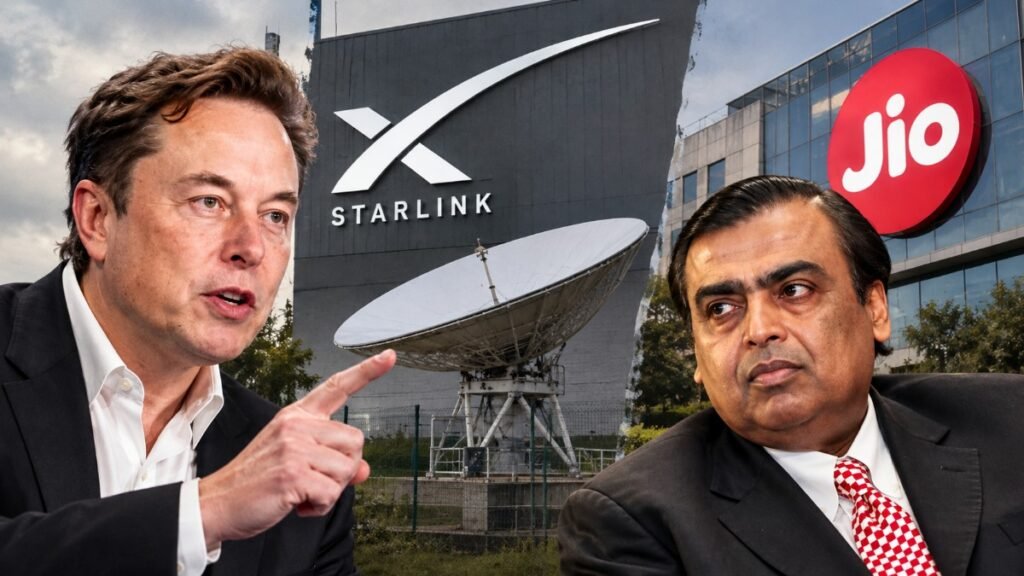
New Delhi: The Elon Musk Starlink India controversy has intensified, with the SpaceX chief accusing supporters of Reliance Industries chairman Mukesh Ambani of “absurd hypocrisy” over the potential entry of satellite internet services into the Indian market.
In a post on X on Sunday, Musk questioned arguments that Starlink would struggle to compete with the low prices offered by Reliance Jio while simultaneously posing a serious competitive threat. He argued that greater competition would give Indian consumers more choices and could put pressure on existing providers to improve their offerings.
Musk also maintained that if Starlink’s services were too expensive, consumers would not buy them, forcing the company to make its pricing more affordable.
Elon Musk Starlink India Row Intensifies
Musk said the arguments made by supporters of Ambani’s internet business were contradictory. According to him, Starlink could benefit ordinary Indians by introducing another option in a market where Reliance Jio is a major telecom player.
He acknowledged that competition could reduce Ambani’s profits but argued that it would not threaten the business’s survival.
The dispute centres on the proposed expansion of satellite-based broadband services in India. Unlike conventional mobile networks that rely heavily on terrestrial infrastructure, satellite internet can potentially connect users in remote and underserved locations.
Musk has repeatedly criticised what he views as barriers to Starlink’s entry into India. He has also argued that satellite internet could help children access educational resources and allow small businesses in areas with limited connectivity to reach wider markets.
Musk Targets Ambani Over Starlink Competition
The latest comments follow earlier posts in which Musk sarcastically addressed Ambani as “Prime Minister Ambani” and accused him of seeking to protect a monopoly.
Musk questioned whether Reliance would allow Starlink to compete in India and argued that satellite connectivity could help people in areas where conventional internet services remain limited.
He also highlighted Starlink’s role in restoring communications during natural disasters in different parts of the world, arguing that satellite services could help save lives when other communication networks fail.
Reliance had not publicly responded to the allegations described in the source report. Musk’s comments represent his position in the ongoing debate; they should not be treated as an independent finding that any company or government authority has acted improperly.
India Says Three Companies Have Satcom Licences
Amid the dispute, Union Communications Minister Jyotiraditya Scindia said India does not permit monopolies in any sector. He stressed that the government’s approach is to provide consumers with a choice of services and service providers.
According to Scindia, three entities had secured satellite communications licences: Elon Musk’s Starlink, Reliance Jio’s satellite venture Jio Satcom and Bharti-backed Eutelsat OneWeb.
The minister said the companies could begin operations after individually fulfilling the required security conditions and other regulatory milestones. Amazon’s Project Kuiper had also expressed interest and would need to follow the established procedure.
Scindia said the government was technology-neutral and that consumers should be free to choose the service and company they prefer.
He also said the Telecom Regulatory Authority of India (TRAI) and the Department of Telecommunications were close to a final decision on the pricing framework for satellite spectrum.
What the Starlink-Ambani Dispute Means for Consumers
The debate could have implications for India’s satellite broadband market, particularly in remote villages, hilly regions and other areas where conventional connectivity is difficult or expensive to provide.
If more satellite internet providers enter the market, consumers could have additional options. However, the actual impact will depend on service availability, pricing, equipment costs, network performance and the terms set by regulators.
Starlink’s commercial prospects in India will also depend on its ability to meet the country’s licensing and security requirements. A licence alone does not necessarily mean that a service is available for immediate commercial use.
For now, the dispute highlights the broader question of how India will regulate satellite communications while balancing competition, security requirements and consumer access.
The government’s stated position is that licensed operators must meet the applicable requirements and that consumers should ultimately be able to choose among competing services. The final regulatory framework and the commercial launch plans of individual providers will shape the next phase of the competition.