

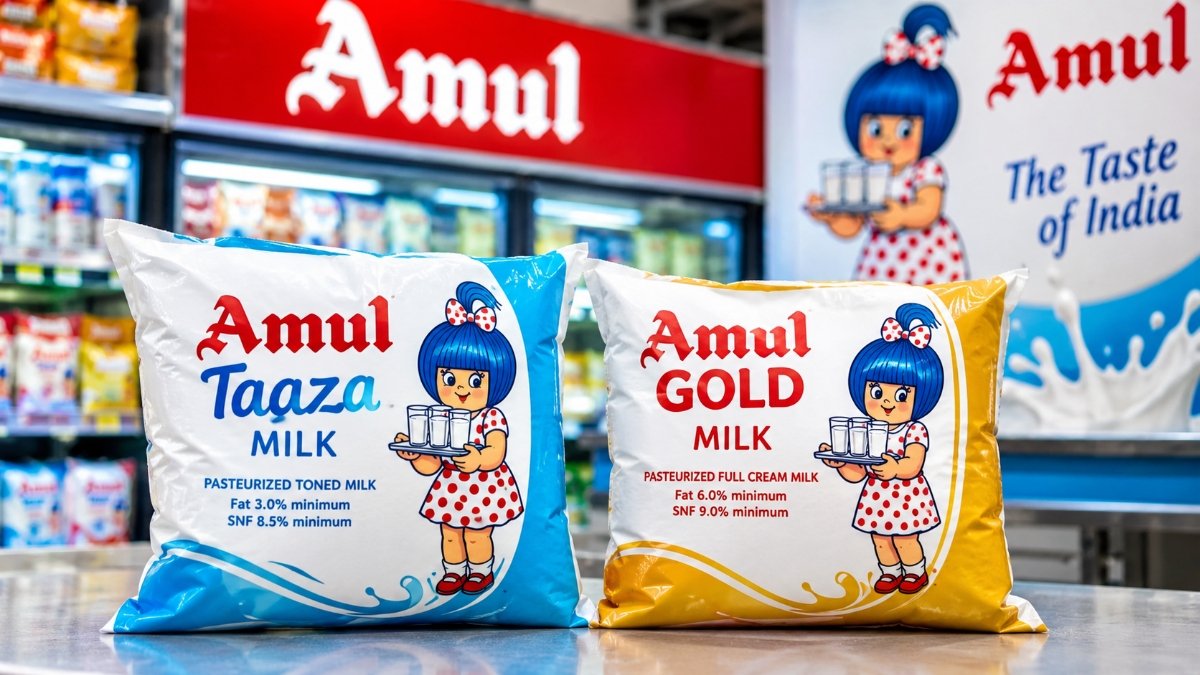
Guwahati, November 11: After Mother Dairy, Amul has announced a fresh hike in milk prices, increasing rates by Rs 2 to Rs 4 per litre for selected milk variants. The revised prices will come into effect across India from November 12, 2026.
The Gujarat Cooperative Milk Marketing Federation (GCMMF), which markets dairy products under the Amul brand, announced the price revision on Wednesday. The increase ranges between 4 and 5 per cent across the affected fresh pouch milk variants.
According to the federation, the price of its popular 3 per cent fat Amul Taaza Toned Milk has been increased by Rs 2 per litre, representing a hike of 3.3 per cent.
Similarly, the price of 6 per cent fat Amul Gold Milk has been increased by Rs 4 per litre, marking a rise of 5.5 per cent.
Amul Milk Price Hike: Details of the Revised Rates
The price revision for the two popular milk variants is as follows:
Amul Taaza Toned Milk
- Milk fat: 3 per cent
- Price increase: Rs 2 per litre
- Percentage hike: 3.3 per cent
Amul Gold Milk
- Milk fat: 6 per cent
- Price increase: Rs 4 per litre
- Percentage hike: 5.5 per cent
The federation has attributed the increase to rising input and processing costs, including animal feed, fodder, packaging materials and fuel.
Why Has Amul Increased Milk Prices?
According to GCMMF, rising production and processing expenses have put additional financial pressure on the dairy sector.
The cost of cattle feed and fodder has increased, adding to the expenses of dairy farmers. Higher packaging material and fuel costs have also contributed to the rising operational expenditure.
The federation said the price revision would help ensure better returns to milk producers, with a substantial portion of the additional revenue being passed on to farmers.
Amul had last increased milk prices in May 2026.
Rising Milk Fat Prices Add to Dairy Costs
The shortage of milk supply over the past few months has also affected the dairy industry. Prices of milk fat have reportedly increased by around 20 to 25 per cent, raising the overall cost of dairy production.
Higher cattle feed prices have further increased the financial burden on dairy farmers. Dairy companies have consequently been required to offer better procurement prices to encourage milk production and improve collection.
The increased cost of milk fat has also made it more expensive for dairy companies to maintain supplies.
Milk Availability Puts Additional Pressure on Dairy Companies
A decline in fresh milk procurement has increased concerns about the availability of milk and milk fat.
When fresh milk procurement falls short of demand, dairy companies generally use a combination of milk powder and milk fat to prepare liquid milk.
However, the sharp increase in milk fat prices has made this alternative more expensive, adding to the financial pressure on dairy companies.
With higher procurement, feed, processing and transportation costs, the latest price revision is expected to affect household budgets.
The new Amul milk prices will take effect from November 12, adding to the recent increase in the cost of an essential daily food item for consumers.