
Nagaon, October 18: Assam on Sunday remembered the martyrs of Phulaguri Dhewa, the historic peasant uprising of 1861 that became an important chapter in the region’s resistance to British colonial rule. Chief Minister Himanta Biswa Sarma and state ministers Pijush Hazarika and Ranoj Pegu paid tribute to the farmers who stood against colonial policies threatening their livelihoods.
Observed on October 18, Phulaguri Dhewa recalls the struggle of farmers in Phulaguri, in present-day Nagaon district, against British policies relating to poppy cultivation and proposed taxes on betel nut and betel leaf. The uprising is widely regarded as one of the earliest organised peasant movements against British rule in Assam.
Phulaguri Dhewa: How the 1861 Peasant Revolt Began
The roots of Phulaguri Dhewa lay in growing resentment among farmers over British colonial policies and economic pressures in the Brahmaputra Valley.
The colonial administration’s ban on poppy cultivation threatened an important source of livelihood for local communities. Farmers were also concerned about proposed taxes on betel nut and betel leaf, which formed part of their traditional rural economy.
In September 1861, farmers assembled to discuss their grievances and submitted a petition seeking relief from the policies. When their demands failed to receive a satisfactory response, the protests intensified.
Farmers from Phulaguri and neighbouring areas gathered for public deliberations known as raij mel. These assemblies became a platform for expressing collective opposition to colonial measures and discussing how to protect their livelihoods.
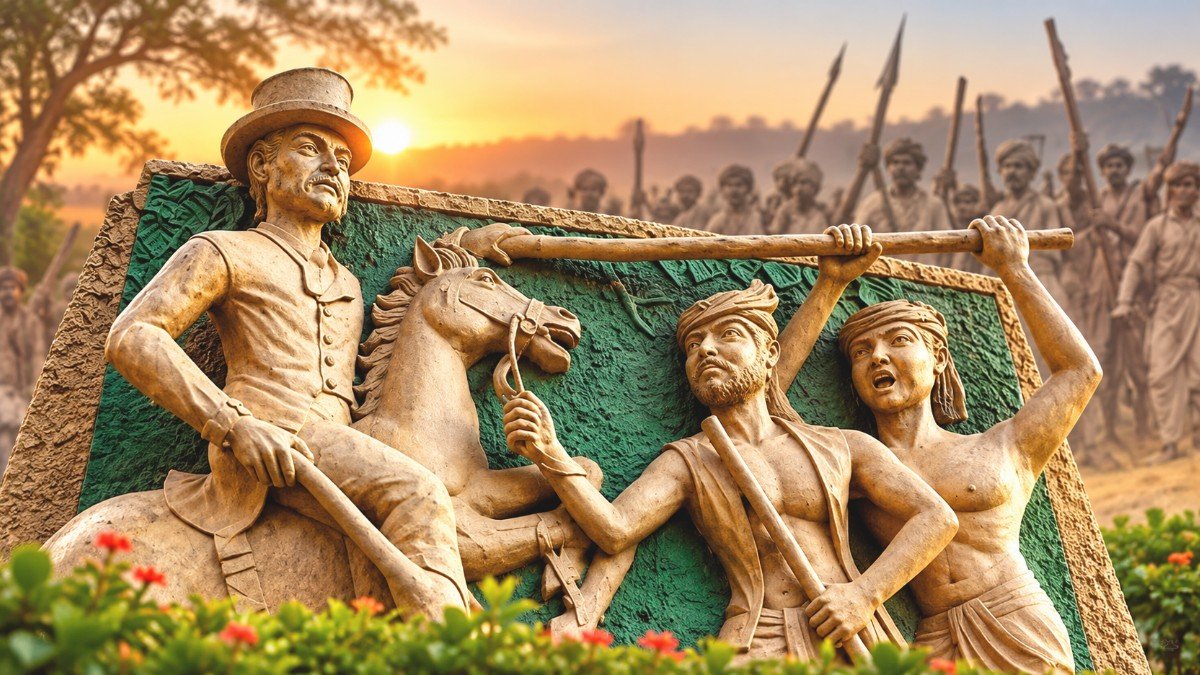
On October 18, 1861, a confrontation took place between the protesters and colonial officials, including Lieutenant B. H. Singer, who was killed during the unrest. The British administration subsequently deployed forces to suppress the uprising.
The crackdown resulted in substantial casualties, arrests and harsh punishments for those accused of participating in the revolt.
Historical accounts differ on the precise death toll. The Government of India’s Azadi Ka Amrit Mahotsav historical repository records 39 peasants killed in police firing, while other historical accounts place the total number of farmers killed in the wider crackdown at around 54.
Why Phulaguri Dhewa Matters in India’s Freedom Struggle
Phulaguri Dhewa holds significance beyond Assam because it highlights the role of ordinary farmers in resisting colonial rule.
Long before many prominent mass movements of India’s freedom struggle, cultivators in Assam were challenging government policies that threatened their economic security and traditional practices.
The uprising also demonstrated the importance of collective action. Through petitions, public meetings and organised resistance, farmers attempted to make their grievances heard by the colonial administration.
Although the revolt was suppressed, its legacy remains part of Assam’s historical memory. It highlights how resistance to colonial exploitation emerged from different regions and communities, including rural populations whose struggles are sometimes overlooked in broader accounts of Indian history.
Himanta Biswa Sarma Pays Tribute to Phulaguri Dhewa Martyrs
Chief Minister Himanta Biswa Sarma paid tribute to the martyrs of Phulaguri Dhewa through a Facebook post on October 18.
In his Assamese message, Sarma recalled that a powerful protest against injustice had emerged on Assam’s soil long before India attained independence. He highlighted the courage, unity and self-respect displayed by the farmers who resisted colonial oppression.
The Chief Minister also described Phulaguri Dhewa as a symbol of the determination of Assam’s people to stand against injustice.
His message placed the uprising within the wider history of resistance to colonial rule and recognised the farmers’ contribution to Assam’s historical legacy.
Pijush Hazarika Highlights the Historical Significance
State minister Pijush Hazarika also remembered the martyrs of Phulaguri Dhewa in a Facebook post.
Hazarika described October 18, 1861, as a significant date in Assam’s history and recalled the farmers’ resistance against British oppression and exploitation.
His message highlighted Phulaguri Dhewa as an enduring symbol of the courage and sacrifice of the farmers who challenged colonial authority.
The minister’s tribute also underlined the importance of remembering historical events that shaped Assam’s identity and its contribution to India’s anti-colonial struggle.
Ranoj Pegu Remembers the Farmers’ Sacrifice
State minister Ranoj Pegu also paid homage to the martyrs of Phulaguri Dhewa in a Facebook post on October 18.
Pegu recalled the historic peasant uprising in Nagaon district against British injustice and exploitation. He said the sacrifice and bravery of the farmers who resisted colonial rule would remain memorable in Assamese history.
His message emphasised the enduring value of the farmers’ courage and their determination to oppose colonial oppression.
The tributes from Assam’s political leadership reflect the continuing significance of Phulaguri Dhewa in the state’s historical memory.
Remembering a Peasant Movement That Shaped Assam’s History
Phulaguri Dhewa remains a reminder that India’s resistance to colonial rule was not confined to prominent political leaders or major urban centres. Farmers and rural communities also played an important role in challenging policies that threatened their livelihoods and dignity.
The annual observance of the uprising honours those who lost their lives and draws attention to an important chapter in the history of Assam.
More than 160 years after the revolt, Phulaguri Dhewa continues to represent the courage of ordinary people who stood together against injustice.
For Assam, the legacy of Phulaguri Dhewa is not merely a memory of a historic confrontation. It is also a reminder of the contribution made by its farmers to the wider story of India’s struggle against colonial rule.