
New Delhi | October 31: The Central Government has announced the schedule for the second phase of Census 2027, with door-to-door population enumeration set to begin on January 25 and continue until February 28, 2027, across most parts of the country.
The announcement was made through a Gazette notification issued on October 30, 2026, by the Office of the Registrar General and Census Commissioner of India under the Ministry of Home Affairs.
According to the notification, citizens will also have the option of submitting their household information online through the Self-Enumeration facility from January 10 to January 24, 2027, before the commencement of door-to-door enumeration.
The government has fixed March 1, 2027, at 00:00 hours as the reference date for the population census. A revisional round will be conducted from March 1 to March 5, 2027, to review and verify the collected information.
The exercise will involve 40 questions covering various aspects of individuals and households, including caste, religion, education, employment, migration, digital literacy and other demographic details.
Census 2027 Schedule: Important Dates
The nationwide schedule for the second phase of Census 2027 is as follows:
- January 10–24, 2027: Self-Enumeration window.
- January 25–February 28, 2027: Door-to-door Population Enumeration.
- March 1–5, 2027: Revisional Round.
- March 1, 2027, at 00:00 hours: Reference Date.
Under the Self-Enumeration facility, citizens will be able to submit their household details independently through the designated online portal. The information will subsequently be verified as part of the census process.
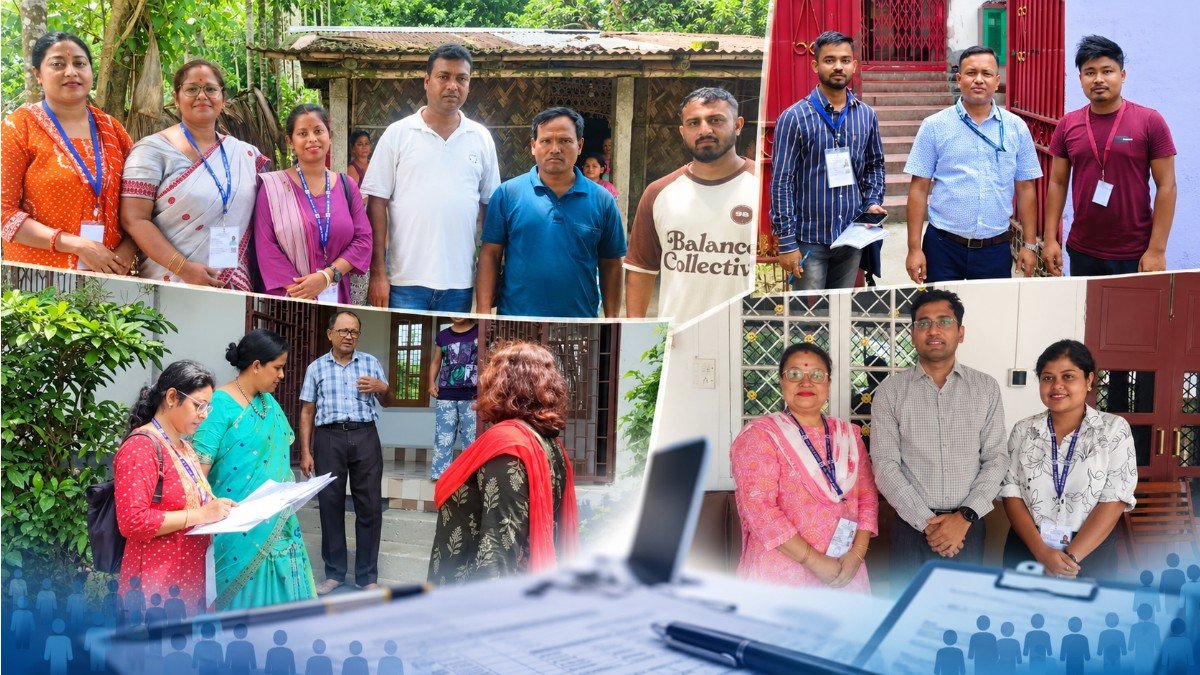
During door-to-door enumeration, census officials will visit households to collect information about every member of the family.
40 Questions in Census 2027: What Information Will Be Collected?
One of the significant features of Census 2027 is the expanded questionnaire for the Population Enumeration phase.
The second-phase questionnaire contains 40 questions, including 13 new areas of information that will be collected for the first time in this census exercise.
The new questions cover several aspects of an individual’s identity, family background, financial access, digital literacy and official documents.
Some of the important details to be collected include:
- Caste, apart from Scheduled Castes and Scheduled Tribes.
- Religion.
- Place and date of birth of both parents.
- Name of the spouse.
- Nationality.
- Digital literacy.
- Permanent residential address.
- Place of COVID-19 vaccination.
- Number of bank accounts.
- Passport number.
- Availability of a driving licence.
- Mobile phone number, if available.
- Aadhaar and voter ID numbers, if available.
Apart from these additional questions, enumerators will also collect information relating to age, gender, marital status, educational qualifications, occupation, employment, place of birth, migration and other demographic characteristics.
The information will help create an updated demographic profile of the country’s population.
Caste Enumeration to Be an Important Feature
Caste enumeration will be one of the major features of Census 2027.
For the first time since Independence, caste details beyond the Scheduled Castes and Scheduled Tribes will also be included in the population census.
The Union Cabinet’s Cabinet Committee on Political Affairs approved the inclusion of caste enumeration in the upcoming census on April 30, 2025.
The exercise is expected to provide detailed information about the country’s caste composition and demographic structure. The data will also be relevant for research, policy planning and the assessment of social and economic conditions.
Four Poll-Bound States to Conduct Census Ahead of the Nationwide Schedule
The second phase of Census 2027 will not take place simultaneously in every state.
The Central Government has announced a separate, earlier schedule for four poll-bound states: Uttar Pradesh, Goa, Punjab and Uttarakhand, excluding the designated snow-bound areas of Uttarakhand.
In these states, the Self-Enumeration facility will be available from November 16 to November 30, 2026.
Door-to-door population enumeration will take place from December 1, 2026, to January 4, 2027. This will be followed by a revisional round from January 5 to January 9, 2027.
For these areas, January 5, 2027, at 00:00 hours will be the reference date for the population census.
This separate schedule has been arranged to complete the enumeration process ahead of the general nationwide schedule.
Census Exercise Deferred in Manipur
Manipur has been excluded from the current nationwide population enumeration schedule until further notification.
The decision comes amid the continuing challenges arising from ethnic violence in the state. The Central Government has kept the census exercise in Manipur outside the announced schedule, with a separate declaration to follow.
The census operations in the state will therefore depend on a subsequent official notification.
Separate Schedule for Snow-Bound Areas
The Union Territory of Ladakh and designated snow-bound areas of Jammu and Kashmir, Himachal Pradesh and Uttarakhand will follow a separate schedule for population enumeration.
In these areas, the enumeration exercise was scheduled from September 1 to September 30, 2026, followed by a revisional round from October 1 to October 5, 2026.
The reference date for these areas has been fixed as October 1, 2026, at 00:00 hours.
The separate schedule takes into account the geographical and climatic conditions of these regions.
First Phase of Census 2027: House Listing Operations
Census 2027 is being conducted in two major phases.
The first phase, known as House Listing Operations (HLO), focuses on collecting information about houses, housing conditions and household facilities.
The first-phase operations were scheduled from April 1 to September 30, 2026, with different 30-day periods allocated to states and Union Territories.
In Assam, the House Listing and Housing Census period was scheduled from August 17 to September 15, 2026. Manipur was assigned a separate schedule.
During this phase, enumerators collected information about:
- Condition and type of houses.
- Materials used in house construction.
- Availability of drinking water.
- Electricity and sanitation facilities.
- Toilet facilities.
- Cooking fuel and kitchen facilities.
- Internet connectivity.
- Household assets and other basic amenities.
The second phase, Population Enumeration, will focus on collecting individual-level information about the population, including demographic, educational, social, economic and migration-related details.
India’s First Fully Digital Census
Census 2027 marks a major shift in the country’s population enumeration system as India moves to a fully digital census for the first time.
Under the new system, enumerators will use mobile applications to collect household and individual information during field visits.
The census will also introduce Self-Enumeration, allowing citizens to submit their information independently through an online platform.
The digital system is expected to streamline data collection, improve data processing and make the overall census operation more efficient.
Rs 11,718.24 Crore Approved for Census 2027
The Union Cabinet has approved an expenditure of Rs 11,718.24 crore for conducting Census 2027.
The exercise will be one of the largest administrative data-collection operations in the country, involving millions of households and a large workforce of enumerators and supervisors.
India’s last population census was conducted in 2011. The census scheduled for 2021 was postponed due to the COVID-19 pandemic.
The upcoming exercise will provide updated information about India’s population, housing conditions, education, employment, migration and social composition.
The findings are expected to serve as an important database for government planning, public welfare programmes and policy decisions across the country.