

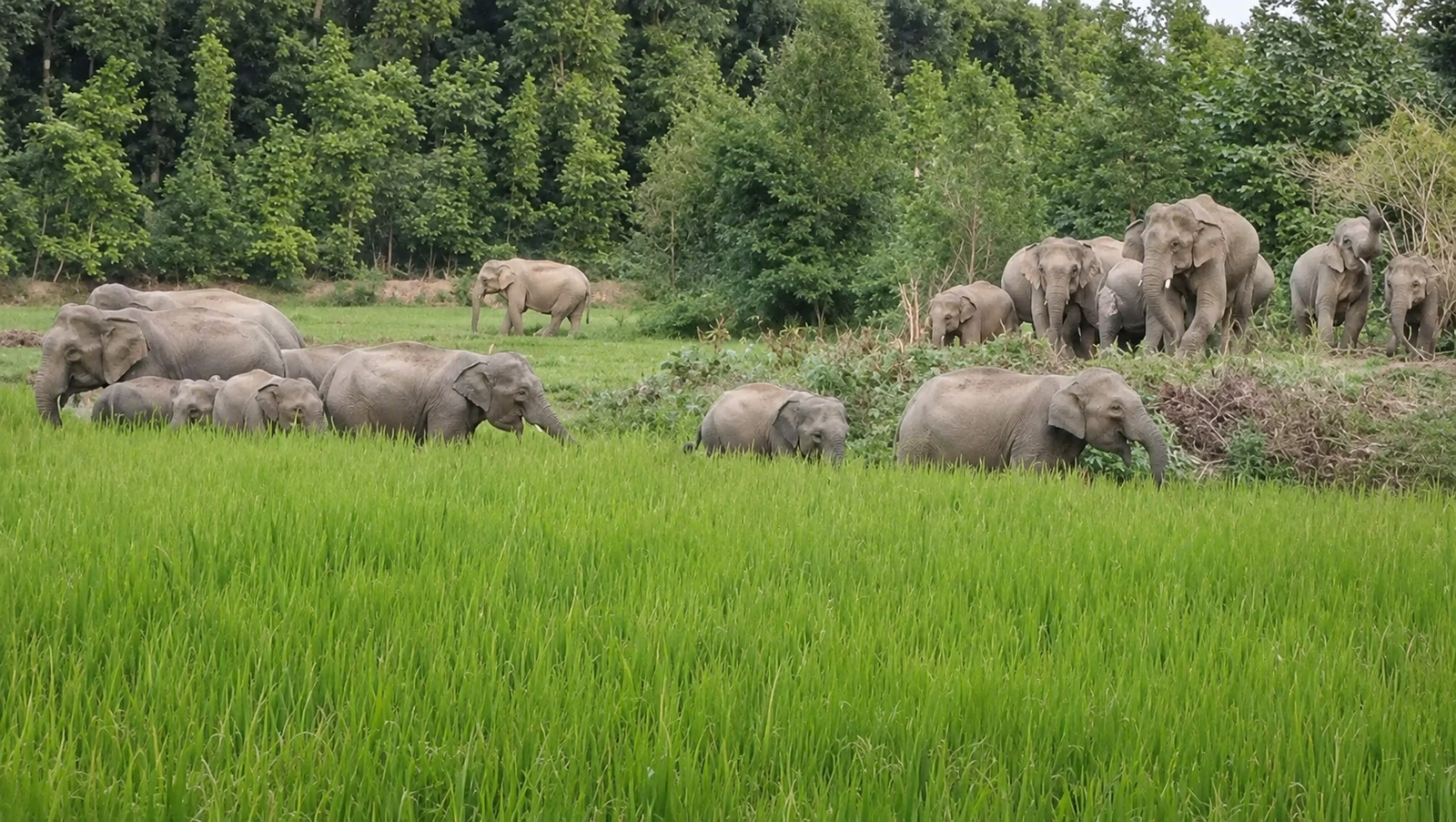
Boko, November 3: More than 40 wild elephants in Boko have triggered panic among residents of several villages after venturing out of nearby forests in search of food.
The elephant herd has been moving across Rajapara, Muhipara, Chenchapani, Kukurmara and Dekapara, causing extensive damage to agricultural crops and raising concerns among villagers over their safety and livelihoods.
The incident has come at a particularly difficult time for local farmers, as it coincides with the paddy harvesting season. Several farmers have suffered losses after standing paddy crops were damaged by the elephants. Banana plantations and other agricultural produce have also been affected, adding to the distress of farming families who depend on their crops for their livelihood.
The movement of the large herd across villages under the jurisdiction of the Bandapara Forest Range has created widespread concern among residents. The repeated entry of wild elephants into human settlements has become a major challenge for communities living in and around the forest fringe areas of Boko.
Wild elephants disrupt traffic on NH-17
The movement of the herd also disrupted vehicular traffic on National Highway 17 for several hours on Sunday afternoon.
As the elephants crossed the busy highway, vehicles came to a halt, resulting in long queues on both sides of the road. Commuters and other road users faced considerable inconvenience until the movement of the herd allowed traffic to resume.
The incident once again highlighted the challenges of managing elephant movement through areas where important roads, agricultural land and human settlements are located close to elephant habitats.
Recurring human-elephant conflict in Boko
According to local residents, the movement of wild elephants into the region is not an isolated incident. Herds frequently emerge from nearby forests in search of food and enter agricultural fields and residential areas.
Apart from damaging standing crops, the elephants have reportedly caused damage to household plantations and residential properties in the past. Such recurring incidents have intensified human-elephant conflict in the Boko region, leaving villagers concerned about both their livelihoods and personal safety.
Forest department efforts to drive elephants back
Speaking about the situation, Range Forest Officer Kulumonali Gogoi said that forest department personnel were making continuous efforts to drive the elephant herd back into the forest.
The presence of more than 40 elephants across multiple villages, however, has once again drawn attention to the difficulties faced by forest officials in managing human-elephant interactions in the region.
Human-elephant conflict remains a major concern
The Boko region has witnessed human-elephant conflict for several years. Past incidents in different parts of the area have included human fatalities caused by wild elephant attacks as well as unnatural deaths of elephants.
The latest incident has renewed concerns over the need for effective and sustained measures to reduce conflict between people and elephants.
For farmers, the immediate concern is the loss of standing crops during the harvesting season. For residents, the continued movement of large elephant herds near homes and roads raises questions about public safety.
The situation underlines the importance of strengthening coordination between the forest department and local communities, improving early-warning mechanisms and exploring effective measures to protect agricultural livelihoods while ensuring the safety of wild elephants and people.
As the herd continues to draw attention across the affected villages, residents are looking for a lasting solution to the recurring human-elephant conflict in Boko.