Dhruv Rathee Released from Detention After CJP Protest, Delhi Police Issues Warning
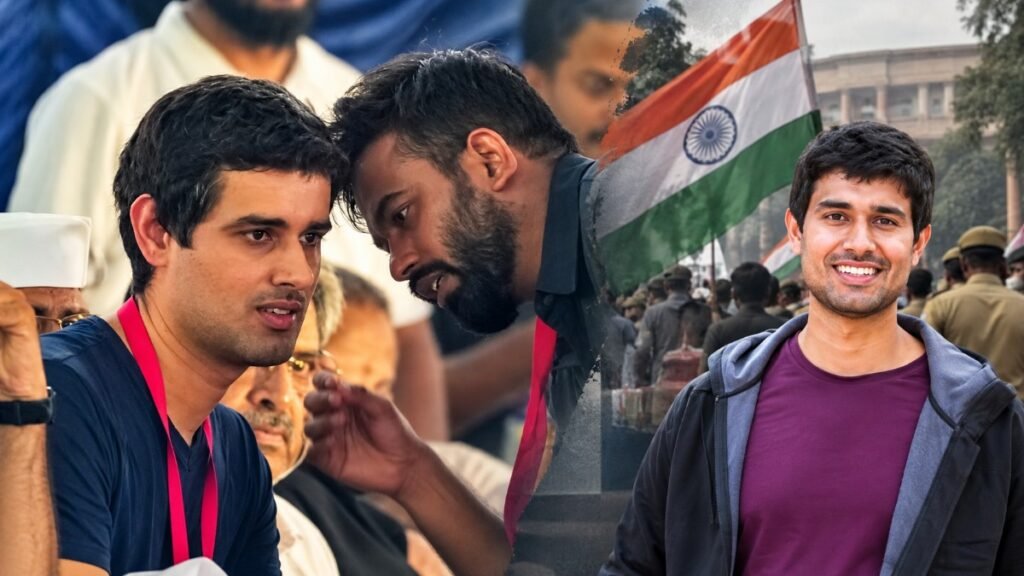
New Delhi: YouTuber Dhruv Rathee released from detention late on Saturday night after being detained ahead of the Cockroach Janta Party (CJP) protest at Jantar Mantar, according to a police official cited in media reports.
A police source warned that Rathee could be detained again or face further legal action if he attempted to visit Jantar Mantar despite prohibitory orders, PTI reported.
Rathee was detained from his residence in Sector 56 of Gurugram on Saturday as Delhi Police intensified security arrangements to prevent protesters from reaching Jantar Mantar. The demonstration was organised to demand the resignation of Chief Election Commissioner Gyanesh Kumar over alleged irregularities related to the Special Intensive Revision (SIR) of electoral rolls.
Dhruv Rathee Released After CJP Protest Detention
The Dhruv Rathee released development came amid a major security operation across Delhi ahead of the planned protest.
According to police sources cited in the report, more than 7,000 protesters were detained at different locations in the national capital. Several opposition leaders, including Aam Aadmi Party leader Arvind Kejriwal, West Bengal Chief Minister Mamata Banerjee, Kerala Chief Minister Pinarayi Vijayan and former Tripura Chief Minister Manik Sarkar, were also detained while attempting to join the demonstration.
CJP leaders Abhijeet Dipke, Ashutosh Ranka and Saurav Das were also placed under preventive arrest after being detained at the airport, according to the report. They were subsequently released by an Executive Magistrate court.
Police said they were examining incidents involving alleged assaults on personnel during the protest. A senior officer indicated that multiple first information reports (FIRs) could be registered in connection with those incidents.
The allegations and proposed police action remain subject to the relevant legal processes.
Why Was Dhruv Rathee Detained?
Rathee was detained as police sought to prevent protesters from reaching Jantar Mantar despite prohibitory orders. The planned demonstration called for the resignation of Chief Election Commissioner Gyanesh Kumar over alleged irregularities associated with the SIR exercise.
The detention took place amid heightened security and a wider political confrontation over the protest. Rathee had travelled to Delhi to participate in the demonstration after attending an earlier CJP protest in Bengaluru.
The police warning following his release indicated that he could face further detention or legal action if he attempted to enter the prohibited protest area. The report did not specify whether any fresh legal proceedings had been initiated against him after his release.
Who Is YouTuber Dhruv Rathee?
Dhruv Rathee is an Indian YouTuber and social-political commentator known for explanatory videos on politics, governance, society and environmental issues.
Born in 1994 in Rohtak, Haryana, Rathee studied mechanical engineering and holds a master’s degree in renewable energy, according to the source report. His videos frequently examine Indian and international political developments and public policy.
Rathee has been critical of the Narendra Modi-led government and has built a substantial online following through his political explainers and commentary.
Before travelling to Delhi, he participated in a CJP protest at Freedom Park in Bengaluru on October 8, alongside actor and activist Prakash Raj and other public figures.
CJP Protest Triggers Political Confrontation in Delhi
The CJP-led demonstration at Jantar Mantar demanded the resignation of Chief Election Commissioner Gyanesh Kumar. The protest was met with extensive police deployment, preventive detentions and restrictions intended to prevent demonstrators from reaching the venue.
The developments drew opposition leaders and political commentators into a broader dispute over the protest and the police response.
Rathee’s release does not, by itself, establish whether further legal action will follow. Police have indicated that action could be taken if he violates prohibitory orders, while the broader cases arising from the protest will depend on the allegations and the applicable legal process.