

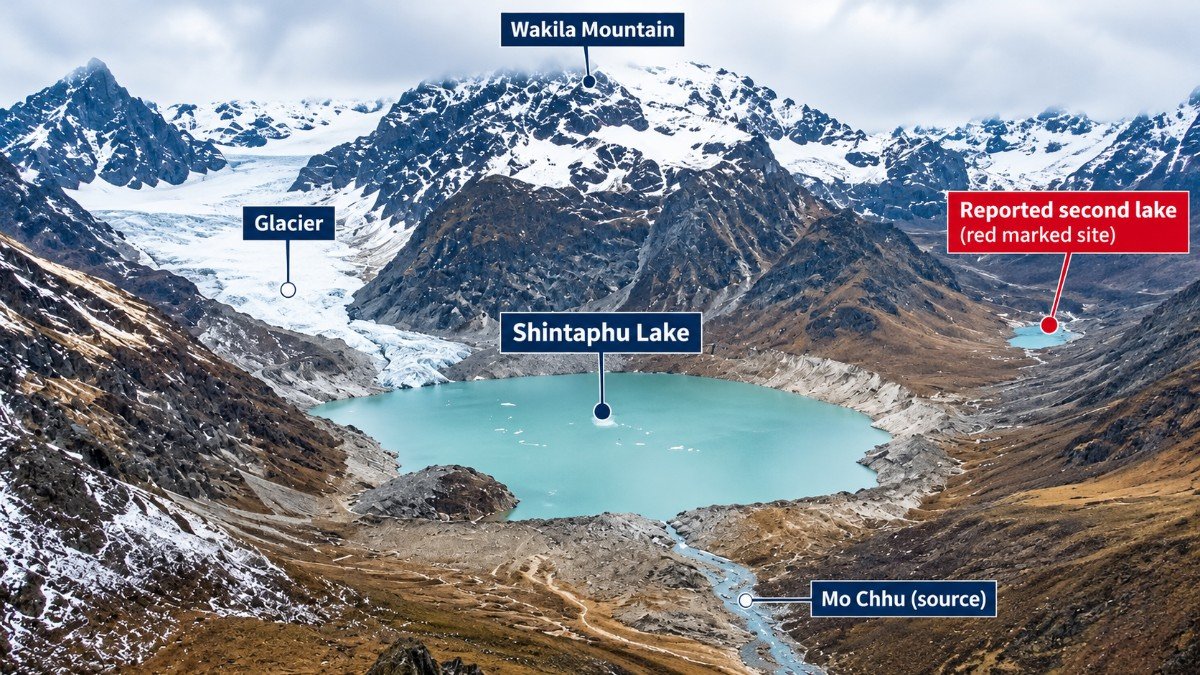
News Desk | October 30: A reported outburst at Shintaphu Lake in Bhutan has raised concerns over a sudden rise in water levels along the Sankosh River. A special advisory has warned of possible flooding in Assam’s Dhubri district and West Bengal’s Alipurduar district.
A glacial lake outburst flood (GLOF) has been reported at Shintaphu Lake in Bhutan’s Gasa district, prompting flood precautions in downstream areas of India. Authorities have been alerted to the possibility of a sudden surge in water levels along the Sankosh River, which flows from Bhutan into India.
The outburst was reported on Thursday evening, October 29, at Shintaphu Lake, located below Wakila Mountain in Lungo, Laya Gewog. The reported incident has raised concerns for communities living close to riverbanks in parts of Assam and northern West Bengal.
A special flood advisory issued by the Government of India has warned of a possible sharp rise in water levels in Dhubri district of Assam and Alipurduar district of West Bengal. According to the advisory details available, floodwater could reach the India-Bhutan border within six to eight hours, prompting authorities to monitor the situation and take precautionary measures.
Assam, Bengal Districts on Alert
The possible movement of floodwater downstream has put riverside communities in Dhubri and Alipurduar under concern. A sudden rise in the Sankosh River could affect low-lying areas, settlements, farmland, livestock and infrastructure close to the river.
Authorities in the affected districts have been urged to closely monitor river levels and remain prepared for precautionary action. Residents living near the river have been advised to stay alert and follow instructions issued by local administrations.
The actual scale of the outburst and its impact on Indian territory remained unclear in the initial reports.
West Bengal Minister Appeals to Residents to Move to Safety
West Bengal Forest Minister and Kumargram MLA Manoj Kumar Oraon has appealed to people living along the Sankosh River in Alipurduar district to move to safer locations as a precaution.
In a video message shared on Facebook, Oraon warned that a surge of water could reach the Kumargram area within approximately one to one-and-a-half hours. He urged residents to cooperate with the administration and take the warning seriously.
The appeal came amid concerns that a sudden increase in the river’s water level could pose a risk to settlements along its banks.
Sirens Sounded in Bhutan; Residents Moved to Safer Ground
The reported outburst occurred at Shintaphu Lake, below Wakila Mountain in Bhutan’s Gasa district. Sirens were reportedly sounded to alert people living near riverbanks, while residents in the affected area were moved to safer ground.
An initial report indicated that a water-level monitoring station was located at Taktsimakhang. However, no alert had been triggered at the station at the time of the initial information, and the full extent of the outburst was not immediately known.
Why Shintaphu Lake Matters
Shintaphu Lake lies in the upper reaches of Bhutan’s Punatsangchhu river basin. The river is known as the Sankosh after it enters India, making a sudden release of water a potential concern for downstream areas.
Shintaphu is reported to be among Bhutan’s potentially dangerous glacial lakes. Such lakes form when meltwater accumulates near glaciers, often behind natural barriers made of rock, soil and ice.
What Is a Glacial Lake Outburst Flood?
A glacial lake outburst flood, commonly known as a GLOF, occurs when water stored in a glacial lake is suddenly released. The release may happen when a natural barrier fails or is breached, or when other processes cause the lake to overflow.
The resulting flood can travel rapidly through mountain valleys, carrying mud, rocks, trees and other debris. Such events can damage roads, bridges, settlements and farmland, while posing serious risks to people living downstream.
Downstream Impact Remains a Key Concern
The immediate concern is whether the reported outburst will lead to a significant rise in the Sankosh River as the water moves towards India. The possible impact on Dhubri in Assam and Alipurduar in West Bengal will depend on the volume of water released, its movement downstream and local river conditions.
Residents in vulnerable riverside areas should remain alert to official advisories and follow directions from district authorities. The extent of flooding and any resulting damage will become clearer as further information becomes available.