
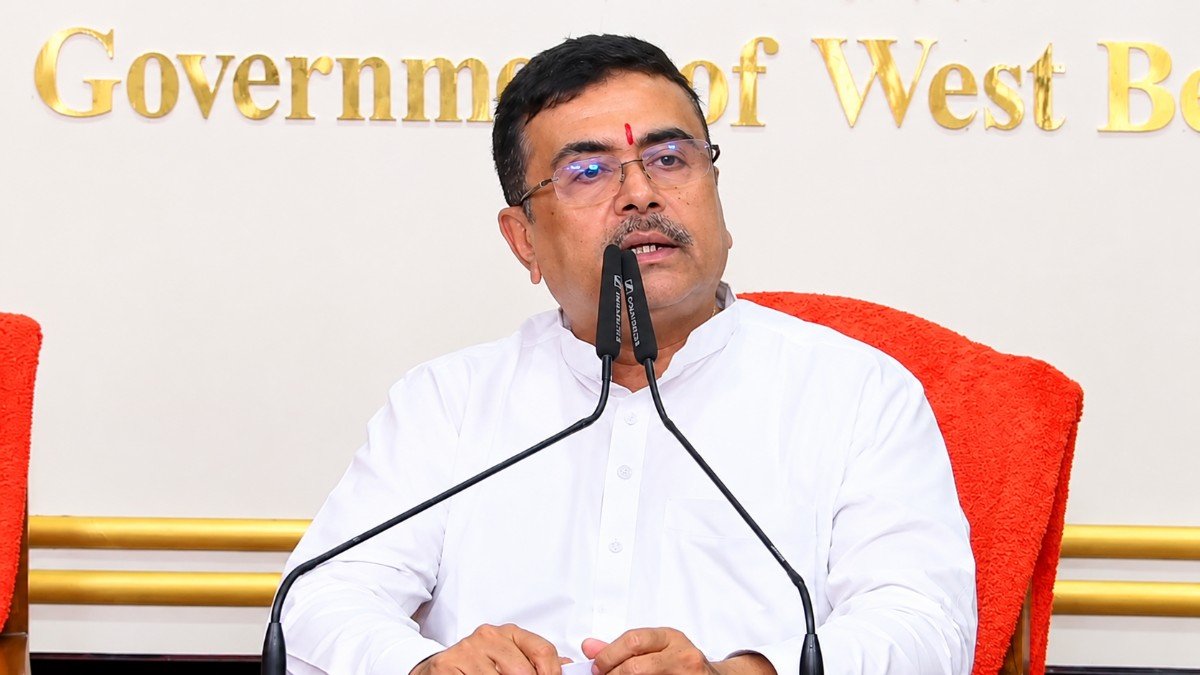
Kolkata, November 5: West Bengal Chief Minister Suvendu Adhikari has taken a strong position on the proposed mosque in Murshidabad, saying the government will not approve its construction plan if it continues to carry the name of Mughal emperor Babur. He has also warned of strict action if supporters of Aam Janata Unnayan Party (AJUP) leader Humayun Kabir attempt to block a national highway on December 6.
Speaking at a press conference at Nabanna on Wednesday night, Adhikari reportedly said that the government had no objection to the construction of religious places of worship on legally owned land. However, he made it clear that the use of Babur’s name would not be accepted for the proposed mosque.
The remarks have added a fresh political dimension to the controversy surrounding the mosque project in Murshidabad.
No Approval If Babur’s Name Is Retained
Adhikari said every citizen has the constitutional right to establish a place of worship. He maintained that the government would not interfere with religious activities or prevent anyone from constructing a mosque on their own land, subject to applicable rules and permissions.
However, he drew a distinction over the proposed name of the mosque.
According to the statement attributed to him, the government would not approve the building plan if the name Babur remained associated with the project.
He also claimed that the proposed construction did not currently have the necessary administrative approvals and building plan clearance.
The Chief Minister reportedly said that if the name Babur was dropped and the land records were found to be in order, the necessary processes, including mutation, land conversion and building plan approval, could be completed without unnecessary delay.
He also said that the Murshidabad district administration had been given clear instructions on the matter.
Humayun Kabir’s December 6 Highway Blockade Threat
The Chief Minister’s remarks came amid renewed tension following a warning by Humayun Kabir, founder of the Aam Janata Unnayan Party and MLA from Nowda.
On November 2, Kabir announced that a large gathering would be organised at the proposed mosque site in Murshidabad on December 6, 2026.
He also threatened to block National Highway 12 for around four to five hours, claiming that supporters would control the approximately 30-km stretch between Rejinagar and Berhampore.
Kabir challenged the administration to stop the proposed blockade if it had the authority to do so.
He also said supporters from several neighbouring areas, including Krishnanagar, Jalangi, Sainthia and Burdwan, would join the programme.
Reacting to the warning, Adhikari reportedly said that nobody had the right to obstruct public roads and disrupt normal life.
He warned that the government knew how to deal with any attempt to block highways or create a law-and-order problem.
The Chief Minister also referred to earlier instances of road blockade threats and said the government would not remain passive if such actions were attempted.
Adhikari Questions Babur’s Historical Legacy
Explaining his opposition to the proposed name, Adhikari criticised Mughal emperor Babur, describing him as a foreign invader and plunderer.
He questioned why people who considered themselves nationalists would choose the name of a historical ruler whom he accused of invading and looting India.
The Chief Minister reportedly suggested that the mosque could instead be named after prominent personalities from Murshidabad or West Bengal.
He mentioned several personalities, including former ministers Abdus Sattar, Nurul Islam Chowdhury and Habibur Rahman, as possible alternatives.
According to him, naming the mosque after a respected local personality would not create any objection from the government, provided the necessary legal requirements were fulfilled.
Murshidabad Mosque Project Remains in the Spotlight
The proposed mosque project has remained a politically sensitive issue since Humayun Kabir announced his plan in 2025.
Kabir laid the foundation stone for the mosque on December 6, 2025, in Murshidabad, marking the anniversary of the demolition of the original Babri Masjid in Ayodhya in 1992.
The project has since attracted political reactions from different parties and leaders.
Kabir has announced that the next phase of construction will begin on December 6, 2026, with the proposed mosque expected to be completed by December 10, 2028.
The latest developments have brought three issues to the forefront: the proposed name of the mosque, the government’s position on construction permissions and the threat of a highway blockade.
With December 6 approaching, the Murshidabad administration faces the challenge of maintaining law and order while dealing with the proposed gathering and highway protest.
Whether the dispute over the mosque’s name and the proposed road blockade will lead to further confrontation remains to be seen.